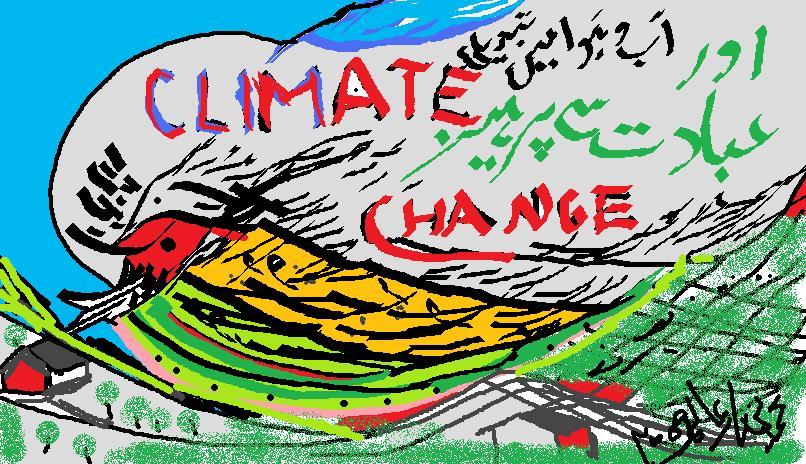
I would like to share the developments, contributions of people joining in Transition Movement in India that has been launched by Labour League Foundation,Sewa, Sufi Trust and other organisations for preparing for the end of petro-modern age and minimising suffering in the urban regions as a result of the loss of livelihoods after the exhaustion of fossil fuels.
Sunday, November 8, 2009
UK government acts on CO2
ACT ON CO2 | Home This is an interesting link. We can multiply communicating for ecological audit and reduce the emissions through transforming ecologically hostile leisure.


Friday, October 30, 2009
Inter-Faith Commons for Mitigation of Climate Change. Transforming Ecologically Hostile Leisure,Consumption,Production,Finance System and Habitats
Children are getting conscious of the reality of the climate change and they want governments to act for mitigating the climate change. Ambreen Fatima ,a class V stundent of Lion's Public School, Ashok Vihar,Delhi is calling for reducing the emissions through avoiding personal vehicles and using public transport .Her video can be seen at the link for promoting carbon neutral leisure at http://ecostrategiccommunicators.ning.com. There are different levels of awareness and different levels of action for climate change.It is interesting to note that a poll conducted by Hindustan Times Next (October 27,2009) has shown that views of the school children are as varied as the position of the government of India and the climate negotiators from the industrialised countries. This variance could be seen as the reflection of the debate on the emission norms that developing and developed countries must adhere not only for the collective ecological wellbeing but also for the sake of the future of their own children.Some children want India to accept the emission norms that are set by the Industrialised nations and they consider the need to address the climate change. Sakshi ,a class XII student of Homerton Grammer School,Faridabad feels that India should consider the current scenario and as a country and society should ask these questions-"do we want to wreck our national heritage? Can our indegenous people and our forests take this relentless assault on them?" She is asking these questions oppossing the contention of the government that India should oppose the caps. Shipra Awasthi, a class VI student of St.Paul's School calls for the technological and financial support for the transition to renewable resource based development.Shivam Gupta,a class XII student of SRDAV School,Dayanand Vihar calls upon the developing countries to recognise the reality of climate change and take the necessary steps for mitigation. However,he supports of the call of India to West for agreeing to a time frame for reducing the emissions as if they did not so, developing countries will bear'disproportionately severe' impact of the climate change.He feels that with 'necessary steps' India's emissions will not increase beyond those of industrialised nations.
In these statements, it can be seen that children in India are getting increasing conscious of the need to address the climate change, protect the ecologically sustainable habitats, ensure collective ecological wellbeing.Some of them appear to imitating the government demand on financing the green technologies as government is asking for this financing for the new technologies and its transfer. In stead of calling for technologies, we should be adopting the ecologically sustainable measures for reducing the demand for energy intensive services and demands. That is very much possible rather than trapping children in usurious debts for getting green technologies. As a matter of fact, recognising the peak oil estimates, there is a need to decelerate the consumption of fossil fuel based resources rather than seeking acceleration of demand for energy intensitive services and habitats.
We can see that there is absence of concern for the sustainability of services and commodities that are based on fossil fuels and it is assumed that energy crisis would be addressed eventually through technology solutions.This assumption could be proven wrong. It is quite likely.What will happen then? What will happen to the livelihoods that are based on the supplies of fossil fuels and hydrocarbons? What would happen to the millions who have migrated to cities in search of livelihoods hoping for a dream that would never end? What would happen to those families who have sold their land in their villages and build houses for earning rent? Recognising such uncertainties ,it is not wise to pursure the expansion of habitats that primarily assumes the supply of energy.Recognising such uncertainties about the supplies of energy, Dr.Muhammad Mukhtar Alam, founder director of Centre for Ecological Audit, Social Inclusion and Governance had called for preparation for the end of petro-modern times. Now it can be seen that there are transition movements that are active in several countries with vibrant transition communities involved in communication and practice of ecologically safe local self reliant communities.http://transitionculture.org is an important initiative that calls for adoption of transition model for communities across the world. Movement for Transforming Ecologically Hostile Habitats initiated in 2009 http://transitionurbanindia.ning.com is working for creation of policy environment for meeting the exigencies of energy crisis and making habitats ecologically safe.
We need to listen to the calls of the children who may inherit this Earth in say 40th century. We need to listen to the calls and cries of poorest who have not got right to homestead land even in Indepedant India. Pravin Sinha ji of FES,India speaking on the occassion of a workshop organised by Deshkal Soceity rightly asked the questions regarding the claims of Shining India and Incredible India.Inflation is creating difficulties for many with the adoption of a development policy that has made India the 5th largest emitter of green house gases. China is second largest emitter of green house gases and its championing of ecologically hostile growth targets has created problems for the ecological safety of the children in India as more than not Chinese development indicators and GDP growth rate is cited for adoption of a development paradigm that is based on acceleration of the growth and expansion of energy intensive consumption,production and habitats. It is sad that both China and India has agreed to oppose the norms of emissions while demanding deep cuts in emissions from the developed countries. It is getting increasingle difficult for nations to agree to the norms and reduce emissions as it gets directly linked to growth, employment, prosperity whose definitions and measurements has not been factored the ecological costs.Centre for Ecological Audit, Socail Inclusion (CEASIG), a collaborative programme of Sewa,Labour League Foundation and Sufi Trust ,Delhi has been calling for adoption of inter-faith commons for mitigating the climate change and eradicating the problems of poverty that gets exacerbated with the adoption of environmentally and ecologically hostile development paradigm. A detailed presentation can be seen at http://slideshare.net/mukhtaralam
In these statements, it can be seen that children in India are getting increasing conscious of the need to address the climate change, protect the ecologically sustainable habitats, ensure collective ecological wellbeing.Some of them appear to imitating the government demand on financing the green technologies as government is asking for this financing for the new technologies and its transfer. In stead of calling for technologies, we should be adopting the ecologically sustainable measures for reducing the demand for energy intensive services and demands. That is very much possible rather than trapping children in usurious debts for getting green technologies. As a matter of fact, recognising the peak oil estimates, there is a need to decelerate the consumption of fossil fuel based resources rather than seeking acceleration of demand for energy intensitive services and habitats.
We can see that there is absence of concern for the sustainability of services and commodities that are based on fossil fuels and it is assumed that energy crisis would be addressed eventually through technology solutions.This assumption could be proven wrong. It is quite likely.What will happen then? What will happen to the livelihoods that are based on the supplies of fossil fuels and hydrocarbons? What would happen to the millions who have migrated to cities in search of livelihoods hoping for a dream that would never end? What would happen to those families who have sold their land in their villages and build houses for earning rent? Recognising such uncertainties ,it is not wise to pursure the expansion of habitats that primarily assumes the supply of energy.Recognising such uncertainties about the supplies of energy, Dr.Muhammad Mukhtar Alam, founder director of Centre for Ecological Audit, Social Inclusion and Governance had called for preparation for the end of petro-modern times. Now it can be seen that there are transition movements that are active in several countries with vibrant transition communities involved in communication and practice of ecologically safe local self reliant communities.http://transitionculture.org is an important initiative that calls for adoption of transition model for communities across the world. Movement for Transforming Ecologically Hostile Habitats initiated in 2009 http://transitionurbanindia.ning.com is working for creation of policy environment for meeting the exigencies of energy crisis and making habitats ecologically safe.
We need to listen to the calls of the children who may inherit this Earth in say 40th century. We need to listen to the calls and cries of poorest who have not got right to homestead land even in Indepedant India. Pravin Sinha ji of FES,India speaking on the occassion of a workshop organised by Deshkal Soceity rightly asked the questions regarding the claims of Shining India and Incredible India.Inflation is creating difficulties for many with the adoption of a development policy that has made India the 5th largest emitter of green house gases. China is second largest emitter of green house gases and its championing of ecologically hostile growth targets has created problems for the ecological safety of the children in India as more than not Chinese development indicators and GDP growth rate is cited for adoption of a development paradigm that is based on acceleration of the growth and expansion of energy intensive consumption,production and habitats. It is sad that both China and India has agreed to oppose the norms of emissions while demanding deep cuts in emissions from the developed countries. It is getting increasingle difficult for nations to agree to the norms and reduce emissions as it gets directly linked to growth, employment, prosperity whose definitions and measurements has not been factored the ecological costs.Centre for Ecological Audit, Socail Inclusion (CEASIG), a collaborative programme of Sewa,Labour League Foundation and Sufi Trust ,Delhi has been calling for adoption of inter-faith commons for mitigating the climate change and eradicating the problems of poverty that gets exacerbated with the adoption of environmentally and ecologically hostile development paradigm. A detailed presentation can be seen at http://slideshare.net/mukhtaralam
Wednesday, October 28, 2009
Moeen Yaseen: Global Vision 2000, Exec. Director addresses the House of Commons
Please examine the content. I could not hear the speech, but brother Moeen has sent this video with special request for sharing.
Thursday, September 17, 2009
Taming the Culture of Intoxicating Drinks
Bible prohibits drinking of intoxicating drinks, even then, men and women belonging to Church has been found appropriating the culture of drinking intoxicating drinks. Most of famous wine brands have their origins in so called Christian countries. According to a recent report published in Mail Today ,Scotland is being considering now to be the major benificiery of global warming as climate change is having an impact on quality of grapes produced in France. Analysing leisure use pattern, we find that indulgence in drinking intoxicating drinks and abuse of drugs is linked with men and women who have free time and they think that using the free time drinking intoxicating drinks is OK. This is not the case with Muslims= men and women following the commands who would use the time through using faith based measures such as recitations,prayer, reading from the holy texts, visiting relatives, friends and those in need. They address the psychological need through prayerful activities and through engaging themselves in concrete work. Recognising prohibition as an inter-faith common and seeking abidance through public policy, we could contribute not only to the health of many, but also to the ecological safety needs.
Wednesday, September 16, 2009
Getting Rid of the Fascination of Energy Intensive Personal Transport
It is strange that mouting evidences on climate change are not getting response in the form of decelerating the consumption of energy intensive personal transport in the urban areas. This can be seen in the form of expansion of ecologically hostile urban habitats such as skyscraper laden townships. Builders and developers keep on advertising their townships without realising whether these township would have sustained supply of energy for all in say 2000 years from now. An article today in The Times of India ( 16 September,2009) is positive about the battery operated electric cars and these cars are being presented as 'Green'. Indeed, they are Green to some extent compared to the emissions that are getting generated from the fossil fuel driven vehicle. Still the moot question that remains is about the sustainability of the supplies for these cars. If the humanity does not have gurunteed renewable energy for these cars then what is the use of these cars as an ideal for transportation. Considering the fact that we would have sustainend resources , it is better to avoid personal ownership of energy intensive transport vehicles. Ecostrategic communicators are discussing the measures for transforming ecologically hostile leisure into carbon-neutral modes based in the neighbourhoods.
Wednesday, September 9, 2009
Maximising Carbon Neutral Locations for Consultations/meetings related to Climate Change
Carbon Neutral Locations are critical for all the meetings related to climate change though that is not ensured by the organisers of the meetings. A network of ecostrategic communicators http://ecostrategiccommunicators.ning.com/ is calling for the promotion of carbon-neutral leisure,transport, production,consumption, energy in this regard for accelerating mitigation efforts for climate change. Government agenceis, bi-lateral agencies ,UN agencies and other involved in work for climate are not yet emphasizing this aspect as part of the mitigation efforts. Most of the meetings and conferences are being help in air-conditioned locations without realising the carbon footprint of such efforts. They do not realise that most of the powerful communicators such as messengers across the word communicator through carbon-neutral means. Their communications reached all as masses understood the importance of their communications. Many groups communicate using the carbon-neutral locations and neighbourhoods. That is what is needed for addressing the climate change. We need to demonstrate our committment for reducing the emission of the green house gases through using carbon-neutral means. I wonder to what extent this would be taken up by the UN agencies championing the cause of climate change.
Monday, August 24, 2009
When We Forget The End of Petro-Modern Times?
How often do we ponder on the resources that are were available to humanity in the past ,that are available now and how much of these would be available in the future. Many feel that these resources are there for us to use for the creation of the best habitats. This is very much true. But , we also realize that all the resources are not renewable. There have been struggles for distributive justice and these struggles may continue in the future as well especially for the renewable resource based livelihoods. Estimates on peak oil indicate that the decline rate in the production of oil is increasing while demand is increasing. Nations having oil reserves would benefit in the short-term but in the long-term , as full scale replacement of the non-renewable resources are not possible, there would be crisis in the habitats that has been created without recognizing such a contingency. It is high time that oil producing nations specially act on these and rest of the nations realize the need to prepare for the end of petro-modern times. We can see that right from the computer and the internet to machine dependent agriculture from the urban to the rural area, everything is dependent on the hydrocarbons. Loss of all these would make a difference to the posterity. We need to prepare a world for the posterity. How this is being done ? Where humanity is united ? What needs to be done for uniting humanity for smooth transition to post fossil fuel age which I started referring to as a Petro Modern age?
Ecologically Benevolent Decision Of Municipal Corporation of Gwalior
Municipal Corporation of Gwalior in Madhya Pradesh has banned halogen lights. Earlier Government of Madhya Pradesh had banned use of air-conditioners in the government offices. These measures are ecologically benevolent as reduction in the use of energy ensure reduction in the emission of green house gases. This is indeed a positive step. We need to welcome this for the sake of future generations and for the protection of ecologically sustainable habitats. It would be wonderful if all the municipalities follow the suit ban advertisement for exhibitionist consumption and support carbon-neutral consumption for ensuring ecological sustainability of the habitats. Movement for Transformation of Ecologically Hostile Habitats has been launched for responding to the peak oil estimates and mitigating the impact of climate change both in urban and rural areas http://transitionurbanindia.ning.com has been formed for discussing these.
Announcing Movement for Transforming Ecologically Hostile Habitats in India
Serious work is needed for preparing for the end of what I call petro-modern times considering the estimates of peak oil and harrowing projections for the climate change. Dr.Muhammad Mukhtar Alam had been calling for preparations in this regards in the e-forums of World Bank, UNDP ,Global Justice Movement, International Simultaneous Policy organisation and several others. Now the movement is thriving and this has been initiated with the launch of two networks of ning platform at http://transitionindia.ning.com/ geared for discussing all the issues related to transition and Movement for Transforming Ecologically Hostile Habitats http://transitionurbanindia.ning.com/ . Please join the movement as we need to ensure minimum suffering in the urban areas that are like to suffer more as more and more people based on fossil fuel based livelihoods would be first to feel the outcome of loss of fossil fuel based energy. You may also like to join the network of ecostrategic communicators at http://ecostrategiccommunicators.ning.com/ for discussing the critical issues with people from across the world who have been working for mitigating climate change and sharing best practices in adaptation.
Subscribe to:
Comments (Atom)

